
How can humanity live in deeper harmony with the rest of nature, so that human societies and the wider tree of life can flourish together?
Dear friends,
Arguably one of the most noteworthy developments towards ecological and planetary health has been the recent surge of interest in Sustainability.
Sustainability is a broad, multi-faceted concept, with so many shades of grey (or green) that it has become something of a buzzword.
In this brief musing, I will not be exploring all the detail and nuance contained in the many versions of Sustainability. Instead I will be attempting to explore my version of the concept. Additionally, I will be sharing some thoughts on the current state of the sustainability of human civilisations.
Sustainability (Julian’s Version)
To better understand a concept, I like to return to the essence of the concept, its heart.
Sustainability comes from the word sustain, which means ‘to cause or allow something to continue for a period of time’ (Cambridge Dictionary).
When we say something is sustainable today, what we are actually implying is that it is continuable (that it can be continued) in the long-term.
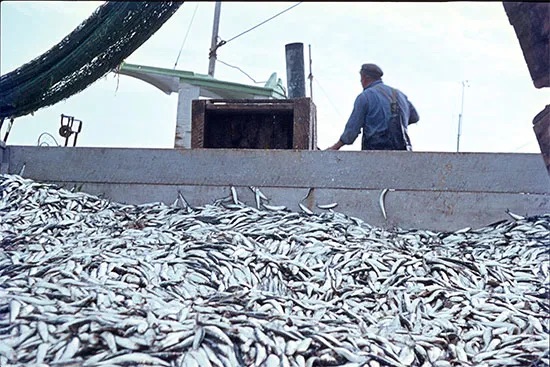
For example, overfishing is an unsustainable practice because it cannot be continued long-term. There will come a point in time when overfishing will deplete fish populations so severely that fish populations will collapse, leaving nothing to fish.
Therefore, what is sustainable is what can be continued in the long-term.
Sustainability, then, is the ability of something to continue in the long-term.
The Sustainability of Human Civilisation
Human civilisation in its present form is deeply unsustainable.
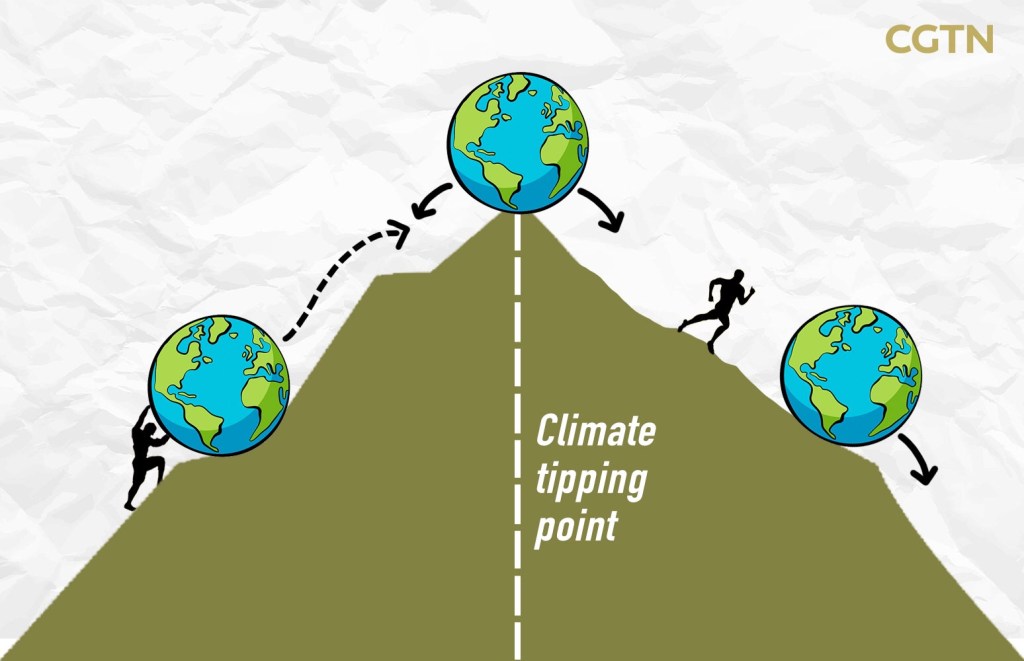
Our industries and our agriculture still belch out lots of greenhouse gases which are severely warming our planet. Within the next few decades, rising global temperatures may trigger several climate cascade events (the result of reaching climate ‘tipping points’) which are likely to make Earth increasingly uninhabitable.
Yet, our excessive greenhouse gas emissions are only the surface of the non-sustainability of our society.
The Deep Non-sustainability of Capitalism
Capitalism, the dominant economic model of most societies today, is also highly likely to be unsustainable.
In Less is More, Anthropologist Jason Hickel explains:
[Capitalism is] organised around the imperative of constant expansion, or ‘growth’: ever-increasing levels of industrial production and consumption, which we have come to measure in terms of Gross Domestic Product (GDP).
Growth is the prime directive of capital. And as far as capital is concerned… the purpose is to extract and accumulate an ever-rising quantity of profit.
Hickel goes on to explain that this would be acceptable “if GDP were just plucked out of thin air.” However, it is not: our economic growth requires resources, which inevitably come from our ecosystems.
As production increases, the global economy churns through more energy, resources and waste each year, to the point where it is now dramatically overshooting what scientists have defined as safe planetary boundaries, with devastating consequences for the living world. (Jason Hickel)
Closing Thoughts
It is undeniably good that there has been a surge of interest in Sustainability. All across the world, governments, communities and companies are awakening to the fact that we cannot continue operating by business-as-usual if we want to avert severe ecological-climate catastrophes.
Having said that, there is deep work that needs to be done to make our societies truly sustainable.
Besides decarbonising our industries to reduce greenhouse gas emissions, we also need to reform the operating principles of our economy. After all, even a carbon-neutral economy that keeps gobbling up ecosystems in pursuit of growth cannot be considered sustainable.
Perhaps then it is worth keeping in mind that Sustainability has many layers to it. For us to be a truly sustainable society, we will need to endeavour to achieve sustainability at the deepest layer possible, not just superficially.
Friends, until next time,
May you be well.
May you be at peace.
May you be healed.
May you be joyful.
May you be deeply loving.
With warmth,
Julian
 Julian JP Lee
Leave a comment